
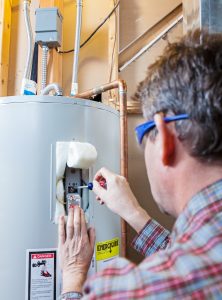
 There are a few different possible symptoms that your water heater is struggling in some way. One of the more obvious ones, of course, is if the system isn’t actually providing any hot water. If your water heater isn’t providing the level of hot water that it should be, there might be a couple of different reasons why. Have a look below for a list of issues that can cause this, and what can be done about them.
Sediment Buildup in Your Water Heater Tank
This is a common cause of low water heater output, especially in areas with hard water issues. Over time, sediment deposits can build up on the bottom of the water heater tank. If the tank isn’t flushed out often enough (like during a maintenance appointment) the buildup can eventually become so severe that the tank will actually become insulated from the burner assembly. The tank will need to be flushed out by a professional to resolve this issue. If the sediment buildup is bad enough, it may need to be manually scraped out to get rid of it all.
Faulty Heating Element or Burner Assembly
Whether you’re using a gas or electric water heater, there is a possibility that the root of your issue is with the heating system itself. Burner assemblies in gas water heaters can become clogged with carbon buildup over time. If the assembly isn’t cleaned out often enough, it can eventually prevent the system from igniting at all. Heating elements are less prone to failure, but can develop dead spots over years of use that will decrease the system’s overall heating output. As far as burner assembly clogs go, having a technician clean out the jets should restore the system to proper working order. If you have a dead spot in your heating element, though, it will need to be replaced to get the output back to where it should be.
Pilot Light or Ignition System Issues
If your water heater doesn’t appear to be providing any hot water at all, it’s possible that the pilot light or whatever other ignition system your water heater uses is out. If your system uses a standing pilot light, you can check this by looking to see if the flame is still going. Otherwise, you’re going to need to have a professional check it out for you.
Cracked Dip Tube Reducing Hot Water Supply
If your water heater is providing hot water, but it’s interspersed with random spurts of cold water, then you probably have a cracked dip tube. This is a plastic tube that directs all fresh water coming into the water heater towards the bottom of the tank, where it can warm up the fastest. If the dip tube cracks, it can leak cold water from the water line into the hot water leaving the tank. Replacing the dip tube should resolve the issue.
Frequently Asked Questions
Question: Why is my water heater not providing enough hot water?
Answer: A water heater may stop providing enough hot water because of sediment buildup, thermostat problems, a damaged dip tube, heating element issues, or a unit that is too small for the household. Performance Plumbing recommends having a professional inspect the system to find the exact cause and prevent repeat problems.
Question: Can sediment buildup reduce my hot water supply?
Answer: Yes, sediment can collect at the bottom of a tank water heater, especially in areas with hard water. This buildup takes up space inside the tank and makes the system work harder to heat water. Flushing the tank and routine maintenance can help improve performance and extend the unit’s life.
Question: What does a broken dip tube do to a water heater?
Answer: The dip tube sends cold water to the bottom of the tank so it can be heated properly. If the dip tube is cracked or broken, cold water can mix with hot water near the top of the tank. This can make the water feel lukewarm or run out too quickly.
Question: Could my water heater be too small for my home?
Answer: Yes, a water heater that is too small may not keep up with showers, laundry, dishwashing, and other hot water demands. If your household has grown or your hot water use has increased, Performance Plumbing can help determine whether repair, maintenance, or replacement with a properly sized unit is the best solution.
Question: When should I call a plumber for not enough hot water?
Answer: You should call a plumber if your hot water runs out quickly, never gets hot enough, changes temperature suddenly, or keeps having the same issue after basic troubleshooting. Performance Plumbing can inspect the thermostat, heating components, tank condition, and overall system to recommend the right fix.
Performance Plumbing provides full water heater services in St. Louis, MO. If you have a problem with your water heater, contact us today to schedule an appointment with one of our expert technicians. We’ll make sure that your water heater is restored to proper operation.