
Discovering water pooling around your water heater can be alarming—but don’t panic. A leaking water heater doesn’t always mean a total system replacement is needed, but it does signal that immediate action is necessary to prevent water damage and restore your home’s hot water supply.
In this guide, we’ll walk you through what to do when your water heater is leaking, the possible causes, and how a professional plumber can help you resolve the issue quickly and safely. Understanding the most common water heater problems can also prepare you to spot warning signs before a small problem becomes a major leak.
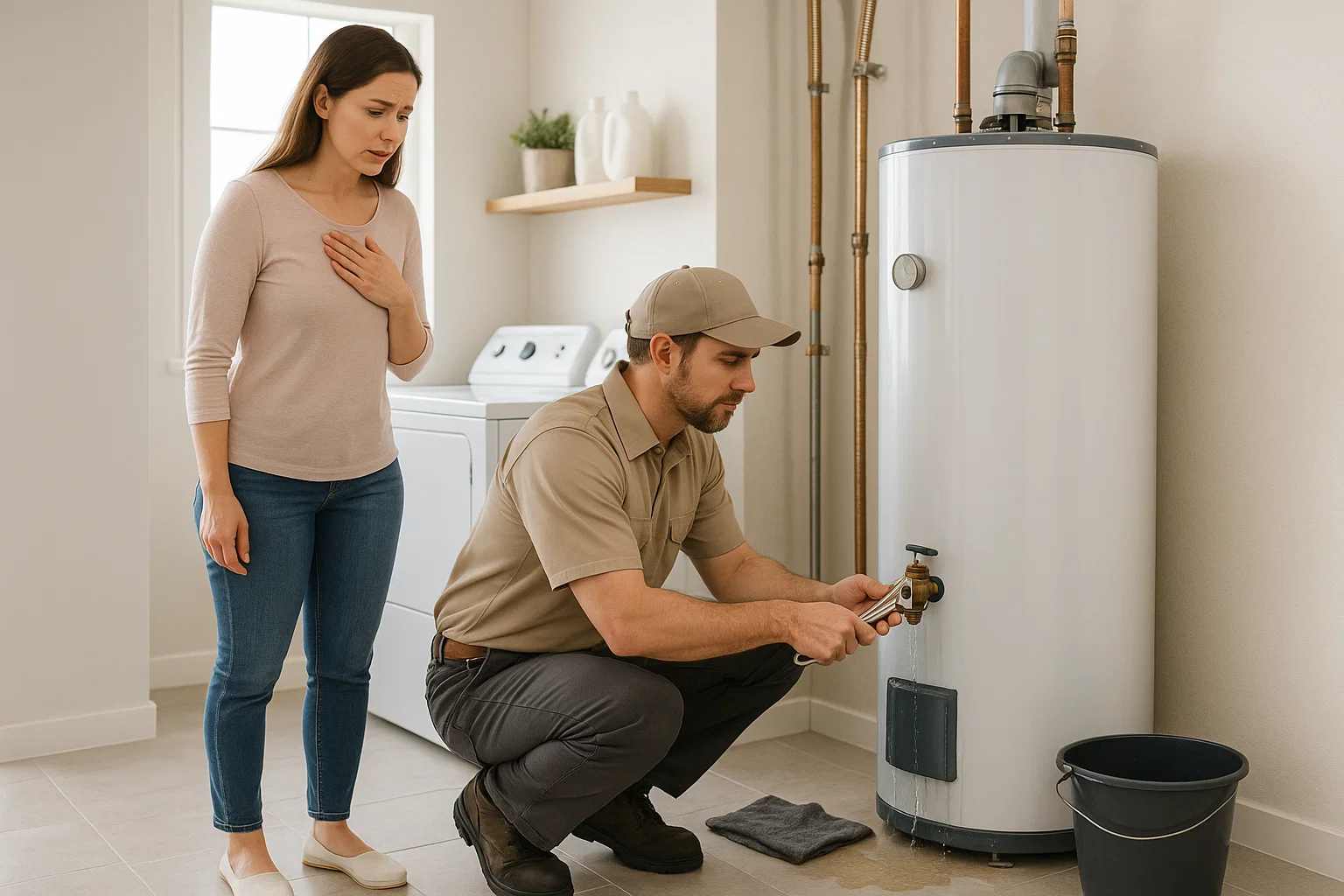
Step 1: Shut Off the Water Supply Immediately
The first step when you spot a leak is to stop the flow of water to the heater. This helps minimize damage and gives you time to assess the situation.
- Locate the cold water shut-off valve above the water heater. This is usually a knob or lever.
- Turn the valve clockwise to shut off the water supply.
- If the valve is corroded or stuck, or if the leak is significant, you may need to turn off your home’s main water supply instead.
Step 2: Cut Power to Prevent Hazards
Next, turn off the power to the water heater. This is a critical safety step, especially if you have an electric unit. For electric water heaters, locate the breaker on your electrical panel labeled for the water heater and switch it off.
For gas water heaters, turn the gas control valve to the “off” position. Do not attempt to relight the pilot or tinker with the gas line. Water and electricity are a dangerous combination—so don’t skip this step.
Step 3: Find the Leak Source on Your Water Heater
Now that it’s safe, you can try to determine where the leak is coming from. Common sources include:
- Cold or hot water inlet/outlet connections: Loose or corroded fittings at the top of the unit can leak over time.
- Drain valve: Found near the bottom of the tank, this valve may be loose or defective.
- Temperature and pressure relief valve (T&P valve): This safety valve may be discharging water due to high pressure or temperature—or it may be faulty.
- Tank corrosion: If water is leaking from the bottom of the unit or the tank itself is rusting, the inner lining may be failing. This is often a sign that a replacement is needed.
One of our expert plumbers can confirm the source of the leak and recommend the appropriate repair or replacement. If you’re unsure what the sounds or symptoms mean, check out unusual sounds from your water heater that could indicate a deeper problem.
Step 4: Mop Up Water Quickly to Prevent Damage
Use towels, mops, or a wet/dry vacuum to soak up standing water. If the leak was significant, set up fans and dehumidifiers to dry the area. Left untreated, water can damage flooring, drywall, and create mold growth in just a day or two.
Step 5: Contact a Licensed Plumber for Help
Once you’ve taken steps to stop the leak and secure the area, it’s time to call in a professional. Even minor leaks can signal deeper issues with the unit’s components, seals, or structural integrity. A licensed plumber can:
- Replace worn valves or fittings
- Flush sediment buildup
- Test or replace the T&P valve
- Recommend a new water heater if the tank is failing
It may also help to review the early signs of heater trouble so you can prevent future leaks before they start. Upgrading to a more efficient model may save you energy and money in the long run.
Frequently Asked Questions
Question: What should I do first when I notice my water heater is leaking?
Answer: As soon as you spot a leak, immediately turn off the water supply to the heater. Then shut off the power — flip the breaker for electric units or turn the gas control to “off” for gas heaters. This limits damage and keeps the area safe.
Question: How can I find the source of a water heater leak?
Answer: Once the system is off, check common leak points: inlet/outlet fittings at the top, the drain valve near the bottom, the temperature and pressure relief (T&P) valve, and the tank itself. Leaks from the tank often indicate internal corrosion.
Question: What should I do with the water around a leaking heater?
Answer: Quickly clean up any pooled water using towels, a mop, or a wet/dry vacuum. Drying the area with fans or dehumidifiers helps prevent water damage to flooring, drywall, and mold growth.
Question: Can I fix a water heater leak myself?
Answer: Minor issues like replacing loose fittings or valves can sometimes be addressed DIY. But leaks from the tank itself or major components usually require a professional plumber to repair or replace the unit.
Question: When should I call a professional plumber for a leaking water heater?
Answer: Call a licensed plumber after shutting off water and power, especially if you can’t find the leak source, if it’s from the tank, or if you’re unsure what to do. A pro can recommend repairs or replacement and ensure it’s done safely.
Contact Performance Plumbing today for plumbing services in St. Louis, MO today!