
Late summer can bring out plumbing problems that weren’t obvious a few months ago. You might have a drain that’s running slower or an outdoor faucet that’s dripping. Or maybe your sump pump hasn’t been checked since the last big storm. Before fall, give the plumbing around your house a once-over. If something’s dripping, draining slowly, or just seems off, our team at Performance Plumbing can take a look before it turns into a bigger headache.
Late Summer Plumbing Maintenance Checklist for Homeowners
Give these areas a quick look before summer wraps up:
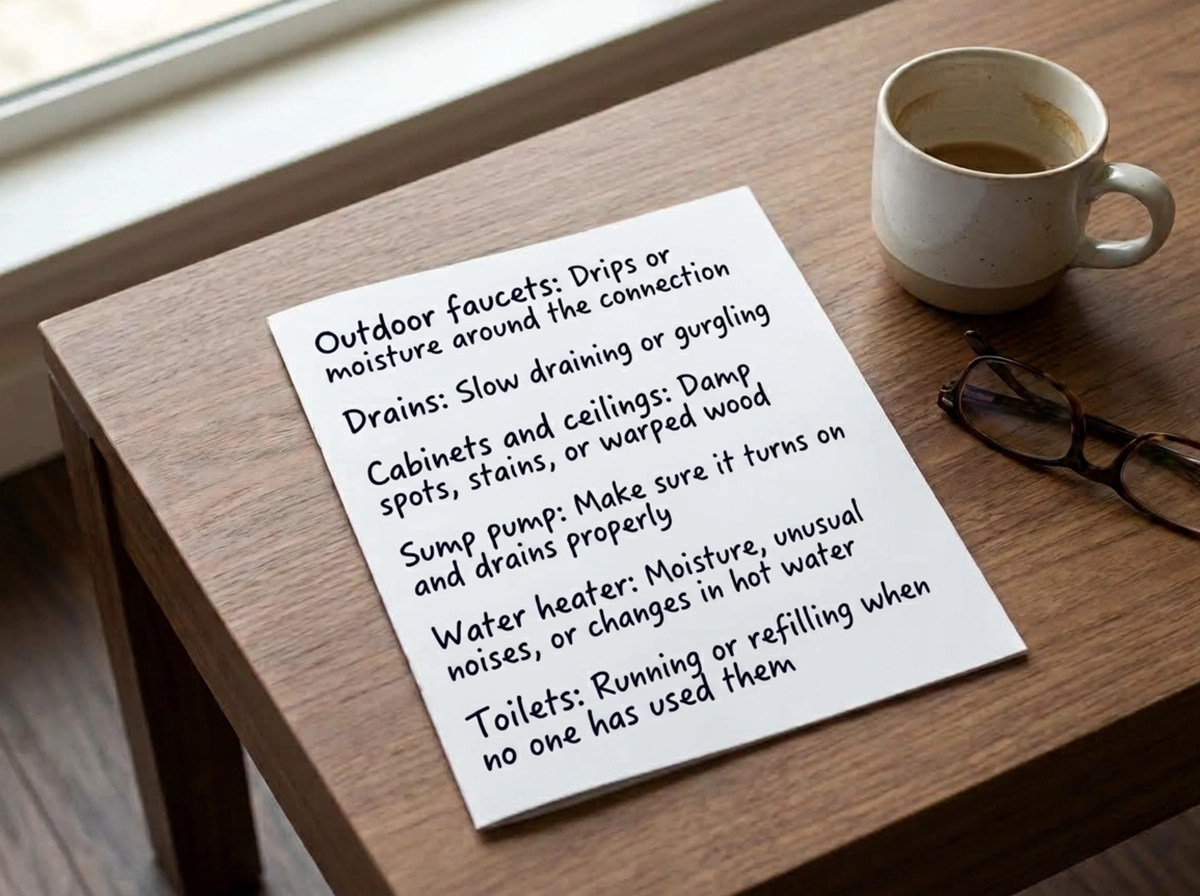
- Outdoor faucets: Drips or moisture around the connection
- Drains: Slow draining or gurgling
- Cabinets and ceilings: Damp spots, stains, or warped wood
- Sump pump: Make sure it turns on and drains properly
- Water heater: Moisture, unusual noises, or changes in hot water
- Toilets: Running or refilling when no one has used them
If anything is suddenly louder, slower, wetter, or running more often than it used to, don’t ignore it just because it still technically works.
How Do You Check Outdoor Faucets for Leaks?
Turn each faucet on and off and then watch for dripping around the handle, spout, or connection point. Disconnect your garden hoses once you’re no longer using them regularly. Leaving a hose attached can also trap water and create problems when the temperatures drop.
How Often Should You Test Your Sump Pump?
Test your sump pump before the fall storms hit by slowly pouring water into the pit until the float rises. Your pump should turn on, remove the water, and shut back off automatically. You also need to check the discharge line outside to make sure water is moving away from the foundation and the line isn’t blocked by leaves, mud, or landscaping.
Common Signs You Have a Drain Clog
Pay attention to how your sinks, tubs, and showers are draining. Water pooling around your feet in the shower, a sink that takes longer to empty, or bubbling and odors coming from the drain could mean you have buildup inside the line. One slow drain may be a local clog, but several clogged drains could mean you have a sewer line problem that needs attention.
How to Tell if Your Water Heater Has a Problem
Look and listen for anything that has changed with your water heater, including:
- Rust or staining around the base
- Moisture or small puddles nearby
- Popping or rumbling sounds
- Hot water running out faster than usual
- Water taking longer to heat up
One of these signs doesn’t necessarily mean your water heater needs to be replaced. If you’re noticing several of them, it’s worth having the unit checked.
Schedule Plumbing Service in St. Louis Before Fall
You don’t have to wait for a slow drain to stop working completely or a small leak to leave water on the floor. Taking care of those problems now, along with checking your sump pump and water heater, can put you in a much better spot heading into fall.
Contact Performance Plumbing today to schedule plumbing service in St. Louis.