
Has your hot water been inconsistent, slow to recover, or driving up energy bills? Spring is one of the best times to take a closer look at what’s going on with your water heater. Today’s options go beyond the traditional tank, making choosing the right system a key factor in performance, efficiency, day-to-day comfort, and utility costs. Here’s a clear breakdown of the three main types of water heaters, the pros and cons, and how they compare.
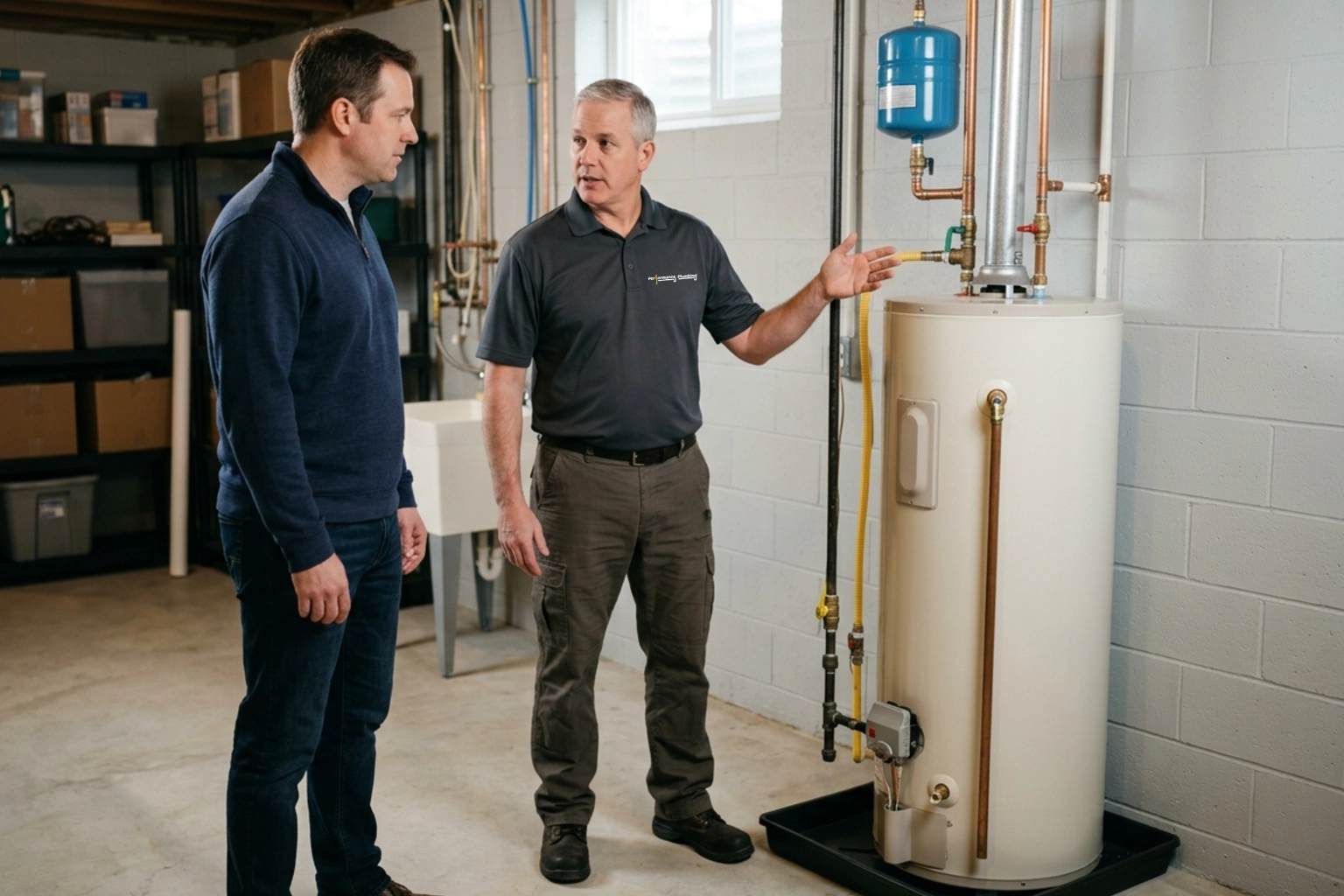
Standard Tank Water Heaters: Reliable and Familiar
A traditional tank water heater stores and heats a set amount of water and keeps it ready for use in your household.
Here’s what works well:
- Has a lower upfront cost
- Comes with simple, proven technology
- Offers easy replacement if you already have one
Here’s what to consider:
- Could run out of hot water during heavy use
- Uses energy continuously to keep water hot and ready to go
- Has a shorter lifespan compared to newer water heater systems
Traditional water heater tanks are a solid, dependable option for many households, especially if your hot water usage is predictable.
Get Hot Water on Demand with Tankless Systems
Tankless systems heat water only when you need it the most and don’t store it. There’s no tank to refill, and it works on demand.
Here’s what works well:
- When properly sized, you’ll enjoy endless hot water
- Offers a higher energy efficiency than traditional water heaters
- Takes up less space than a regular water heater tank
Here’s what to consider:
- Comes with a higher upfront cost and installation fees if you don’t have a tankless setup already
- May require upgrades to gas lines or electrical systems to properly install
- Has limits if multiple fixtures run at once
Tankless water heaters are an ideal fit for homes that want efficiency and don’t want to worry about running out of hot water.
High Efficiency Heat Pump Water Heaters
Heat pump water heaters work differently from traditional or tankless models. Instead of generating heat directly, they pull heat from the surrounding air and transfer it into the water for use.
Here’s what works well:
- Significantly lowers your energy usage
- Can reduce utility costs over time
- Potentially offers a longer lifespan in many cases
Here’s what to consider:
- Comes with a higher initial investment
- Works best in spaces with enough air volume (like garages or basements)
- Has a slightly slower recovery time compared to traditional systems
These systems are a good fit if you want long-term savings and energy efficiency.
How to Choose the Right Water Heater for Your Home
The best option for a new water heater depends on how your household uses hot water and what matters most to you. It’s also essential to consider your home’s layout, available space, and existing connections. Remember that not every system is a direct swap from a traditional water tank system, and your installation requirements can vary widely.
There’s also no need to guess what works best for your household. Our team can help you find the right system. Upgrading your water heater isn’t just about replacing equipment. It’s also about improving how your home functions day to day.
Contact Performance Plumbing to schedule water heater services today.